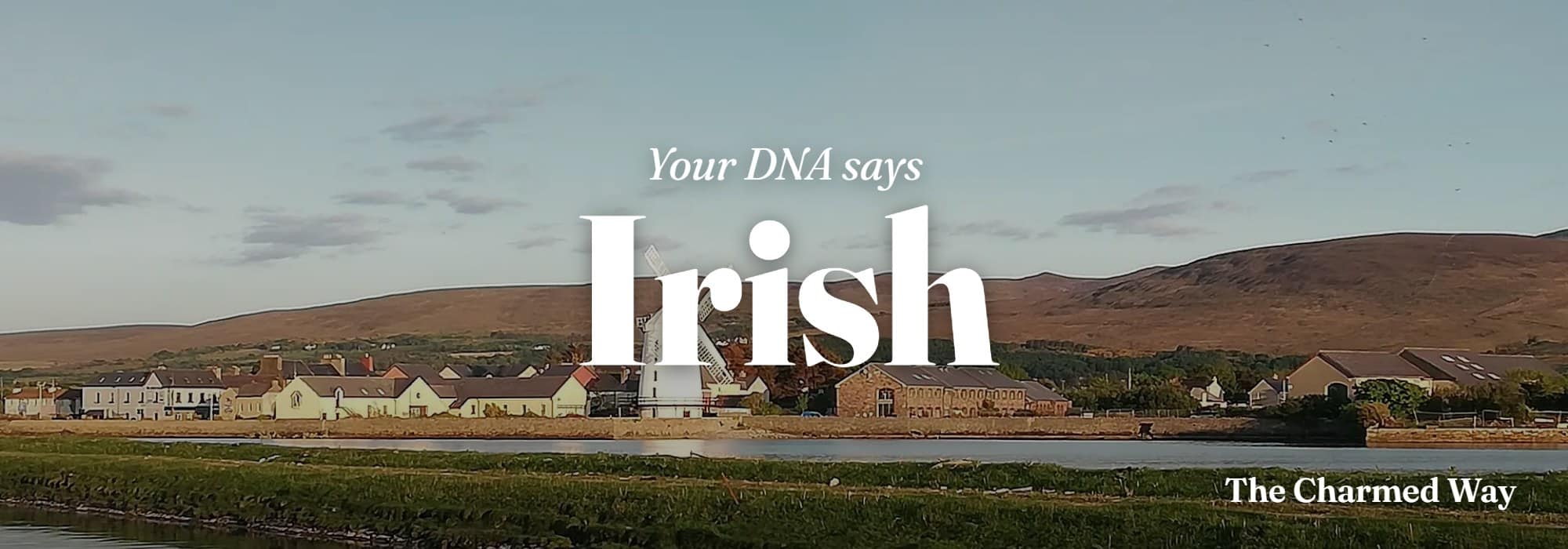
Turning a percentage on a screen into a real place you can stand in.
The email arrives, you open the results, and there it is: Ireland. For many people that moment is a surprise. For others it confirms a story told at the kitchen table for years. Either way, the next question is the same. Where in Ireland, and can I go there?
A DNA test can start that journey, but it cannot finish it on its own. Here is what your results really mean, and how to turn them into a trip that feels personal.
What your ethnicity estimate can tell you
The percentage is an estimate, not a measurement. Each company compares your DNA with its own reference groups, so results differ between companies and can change over time. A brother and sister can see different numbers, even with the same parents.
Read it as a clue. A strong Irish result tells you there is Irish family somewhere in your tree. Some tests go further and point to a region, such as the south west or Connacht. That is useful for focusing your research, but it is not yet a townland, a parish or a name.
Your DNA matches matter more
The list of matches is where the real answers sit. These are people who share DNA with you, often cousins you have never met. When a match has a family tree with an Irish place in it, you have something solid to follow.
Start with your closest matches, look for a shared surname or county, and note any townland or parish that appears more than once. Those repeated places are the ones worth visiting.
From a clue to a place
Once you have a surname and a county, the free Irish records can often take you further. Church registers, civil records, the 1901 and 1911 census and Griffith's Valuation can point to a parish and a townland, the small place name that matters most when you arrive. Our guide to free Irish genealogy records shows where to look.
You do not need a complete tree before you travel. A surname, a county and one or two places are often enough to plan a meaningful day.
What a DNA trip to Ireland feels like
Standing in the place your family left is different from reading about it. You see the fields, the church, the road to the nearest town, and the graveyard where your surname may still be carved in stone. It is quiet, and it is often emotional.
On a private tour, there is time for all of it. Mary Sheehan, a qualified National Tour Guide and lifelong Kerry resident, plans the route around your family places, so you are not watching the clock or squeezing your roots into a coach schedule. Our Legacy Trail is built for exactly this.
Before you travel
Bring screenshots of your closest DNA matches and their trees, your surname and its spellings, and any place names, even uncertain ones. Bring copies of papers, never originals. Tell Mary what you know when you enquire, and she will shape the day around it.
Questions About Irish DNA Results
Can a DNA test tell me which Irish county I come from?
Sometimes it suggests a region. Your DNA matches and the records are what usually lead to a county, parish or townland.
Why are my results different from my sibling's?
You each inherit a different mix of your parents' DNA, so estimates can differ.
Do I need a full family tree before I visit?
No. A surname, a county and a place or two are enough to plan a day around your family's story.
Can Mary help plan a tour around my DNA results?
Yes. Share what you have when you enquire, and she will plan the route around your family places.
Ready to stand where your story began? Plan My Tour or call Mary on 087 266 9656.