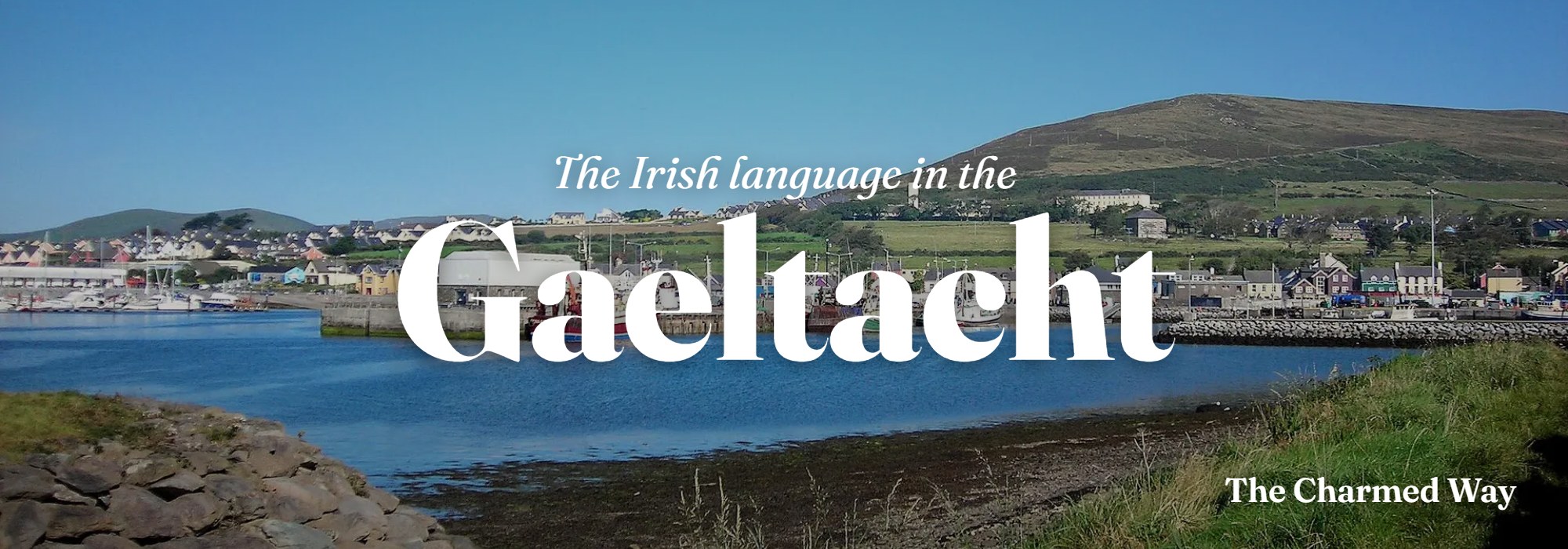
A visitor's guide to the Gaeltacht, where Irish is still part of everyday life.
Drive west on the Dingle Peninsula and something changes. The road signs are in Irish. The names on the shops are in Irish. In the pub or at the shop counter, you may hear it spoken as a first language. You are in the Gaeltacht.
For many visitors this is one of the most moving parts of a trip to Ireland. The language their great-grandparents knew is not only in books. On this peninsula it is still alive.
What is the Gaeltacht?
A Gaeltacht is an area of Ireland where Irish is the community language. The Dingle Peninsula Gaeltacht, known in Irish as Corca Dhuibhne, takes in Dingle town and the western end of the peninsula, out through Ballyferriter, Dunquin and Slea Head.
Within the Gaeltacht, road signs give place names in Irish, and many shop signs are in Irish too. Dingle town is Daingean Uí Chúis, often shortened to An Daingean, and Ballyferriter is Baile an Fheirtéaraigh. Knowing a few place names makes the signs far easier to follow.
Hearing the language on your trip
You do not need to speak Irish to enjoy the Gaeltacht. Everyone speaks English too, and visitors are warmly welcomed. Listen in a local pub, look at the shop signs and the names on the map, and you will soon notice the language all around you.
The Slea Head Drive passes right through the Gaeltacht, so a day touring the western end of the peninsula brings you into its heart. In Ballyferriter, Músaem Chorca Dhuibhne, the local museum, tells the story of the area and its people.
Learning a little Irish
For those who want to go further, Oidhreacht Chorca Dhuibhne runs Irish language courses for adults throughout the year, with week-long courses in Ballyferriter during the summer. Some visitors plan a whole trip around a course, and add touring days before or after.
A few Irish phrases to try
A word or two of Irish is always appreciated. Dia duit means hello. Go raibh maith agat means thank you. Sláinte means cheers, or good health. Slán means goodbye.
Why the Gaeltacht matters
The Irish language carries the place names, songs and stories of the people who lived here for centuries. For anyone with Irish roots, hearing it spoken on the Dingle Peninsula can feel like coming home. It sits naturally alongside the music, storytelling and customs described in our guide to Irish traditions.
Questions About the Dingle Gaeltacht
Where is the Gaeltacht on the Dingle Peninsula?
It takes in Dingle town and the western end of the peninsula, including Ballyferriter, Dunquin and the Slea Head area.
Do I need to speak Irish to visit?
No. Everyone speaks English as well, and visitors are made very welcome.
Why are the road signs only in Irish?
Inside the Gaeltacht, place names on signs are shown in Irish. Dingle town is Daingean Uí Chúis, often shortened to An Daingean, and Ballyferriter is Baile an Fheirtéaraigh.
Can I take an Irish language course in Dingle?
Yes. Oidhreacht Chorca Dhuibhne runs adult courses throughout the year, with week-long summer courses in Ballyferriter.
Want to see the Gaeltacht for yourself? Plan My Tour or call 087 266 9656.